Software Development
Sprints work well for short term planning, but you also need an overall plan so you know when you'll achieve your major deliverables.
Sign Up for a Free Trial
Sprints work well for short term planning, but you also need an overall plan so you know when you'll achieve your major deliverables.
Sign Up for a Free Trial
There are many tools for managing short term software dev, but they don't give the big picture. What is the progress towards the strategic goals for the next major release? GamePlan is the solution.
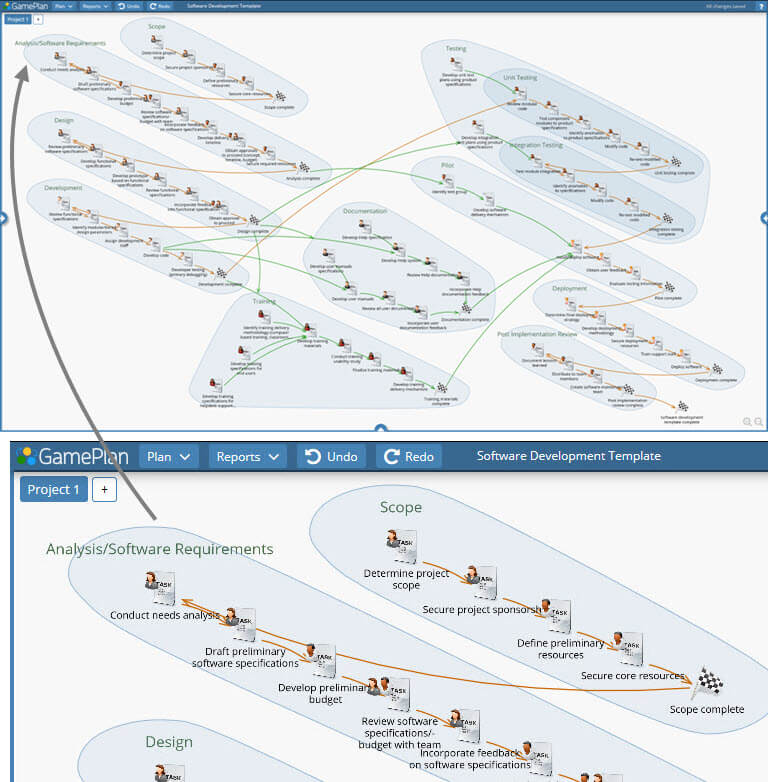
Creating a plan is as easy as importing development tasks and assigning team members. The plan is visual so everyone understands it. The critical path and task dependencies are clearly shown.
The image to the right is Microsoft Project's Software Development Plan in GamePlan. It shows all aspects of commercial software development. Start with this plan and adapt it to your own processes. Then follow this plan to achieve your release goals on time.
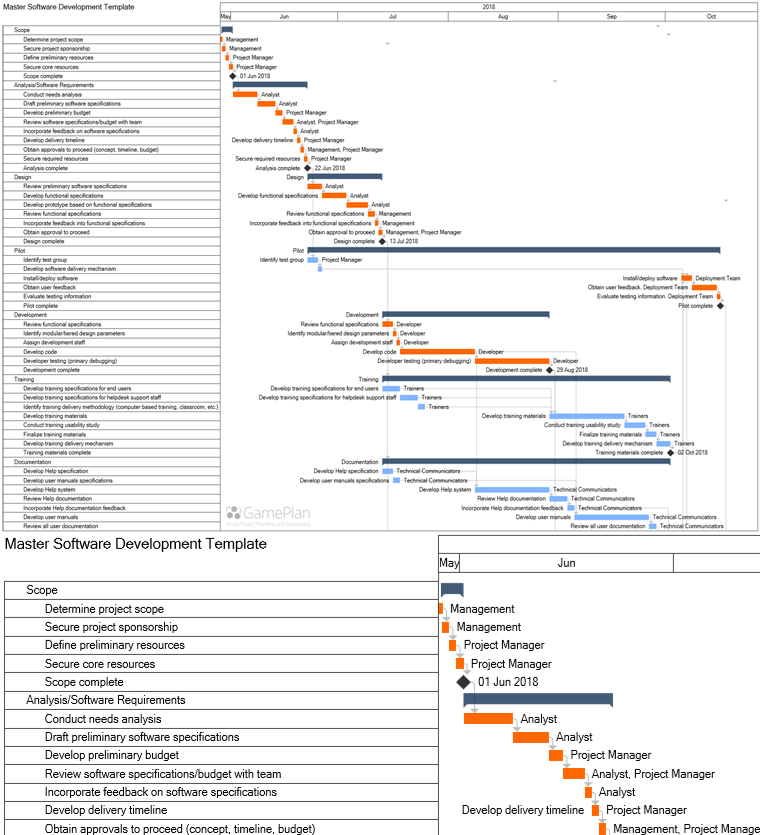
GamePlan creates a resource-leveled project schedule from the project plan. A resource-leveled schedule is an achievable schedule because people are not double-booked.
When any change is made to the plan, the schedule is automatically updated.
The schedule gives you achievable release dates. Other departments can then work confidently and efficiently around these dates.
The schedule also shows everyone when they can expect to work on their tasks. This eliminates wasted time.
A challenge in software development is estimating how long development tasks will take. This makes tracking very important. You track your project by entering when people actually worked on tasks.
Tracking keeps your schedule up to date, so that everyone can rely on it. When a task takes longer than expected, the downstream schedule updates.
Tracking the project also shows the project status. How far through the project are you? When will it finish? This information is always known.
Tracking also gives you a permanent record of plan versus actuals. Analysing this data in a project post-mortem is a valuable learning experience that makes planners better at planning.